
THE FULL STEP-BY-STEP GUIDE
What to do about crawl space mold, in order.
Stay out of the crawl space.
Look from the access opening only. The U.S. Department of Energy’s Building America guidance says that if a section has a significant amount of standing water, do not go into that area, and to keep away from exposed electrical connections.
Look for water first.
Standing water, puddles, wet soil, water stains and rusty pipes are signs of a moisture problem. So are damp, sagging or discolored insulation and a torn or missing ground cover.
Rule out a plumbing or drain leak.
Turn off every fixture and listen at the access. Hissing or running water means a supply pipe is leaking. A sewage odor or paper on the ground means a drain line is leaking. Limit water use and call a plumber.
Check outside.
From outside, check that gutters are clear, downspouts are connected and drain away from the house, and the ground slopes away from the foundation. Clear leaves and soil from the foundation vents.
Protect the house above.
If the furnace or ducts are under the house and you suspect mold in them, do not run the system until it has been checked. Keep the access cover in place so children and pets stay out.
Arrange a moisture assessment before cleanup.
The framing, subfloor and insulation need to be checked with moisture meters to help determine which materials are affected. Cleaning before the moisture is found and stopped does not last. If sewage was involved, dry readings do not establish that contamination has been removed.
IDENTIFY FROM THE ACCESS
Where crawl space moisture usually comes from.
Describe what you can see, hear and smell from the access. Do not go in to confirm it.
| Moisture source | What you may notice | What to do |
|---|---|---|
| Bare or poorly covered soil | No plastic on the ground, or plastic that is torn, bunched up or missing in places. Damp air and a musty smell with no standing water. | The Washington State Department of Health recommends heavy plastic over earth floors in crawl spaces. Have the growth and the wood’s moisture assessed first. |
| Rainwater or groundwater | Water or wet soil after heavy rain, often along the foundation wall or in a low area. | Check gutters, downspouts and the slope of the ground from outside. A drainage contractor needs to find how the water gets in. |
| Plumbing or drain leak | A wet area below a bathroom or kitchen, dripping, or the sound of running water. A drain leak brings a sewage odor. | Close the main water valve for a supply leak. Limit water use for a drain leak. Call a plumber. Treat sewage as contaminated. |
| Blocked vents or leaking ducts | Foundation vents covered by leaves, soil, stored items or foam blocks. Ducts that sag, leak or have come apart. | Clear the vents from outside. Have a heating contractor repair the ducts after the space has been assessed. |
A LEAK CAN BE SHUT OFF · DAMP GROUND CANNOT
What you can stop from outside the crawl space.
Everything here is done from outside the crawl space. If the only water shutoff is inside it, call your water provider or a plumber.
Supply leak: close the main water valve.
Look for the house shutoff in the garage, a utility closet or on an outside wall. If the valve is inside the crawl space, do not go in for it.
Drain leak: stop sending water down.
Avoid flushing, showers, laundry and the dishwasher until a plumber has found the break.
Rainwater: move it away from the foundation.
From outside, and only in safe conditions, clear gutters and reattach or extend downspouts. EPA advises making sure the ground slopes away from the foundation.
Leave equipment and wiring alone.
Do not plug in, unplug or reset a sump pump or any other equipment under the house while the ground is wet. Do not run an extension cord, a fan or a heater into the crawl space.
AFTER THE MOISTURE IS STOPPED
What you can do yourself, and why it is limited.
There is very little safe do-it-yourself mold cleanup in a crawl space. Entry, removing moldy insulation and cleaning framing overhead are jobs for people with the right equipment and protection. The Washington State Department of Health says to hire a professional when mold is in hidden places or the area has been contaminated by sewage. Your part is outside the crawl space and in the rooms above it.
Fix what you can reach from outside.
Clear gutters, connect downspouts and make sure they discharge away from the house. Clear the foundation vents and the access well.
Do not spray or fog under the house.
EPA does not recommend biocides such as chlorine bleach as a routine practice during mold cleanup. Dead mold may still cause allergic reactions, so it has to be removed, and the moisture has to be fixed.
Do not add heat, fans or lights.
Do not put space heaters, household fans or plug-in work lights into a damp crawl space. They are an electrical hazard there and can move spores toward the house.
Watch the rooms above.
Check floors for new cupping, soft spots or odor. Photograph changes and note the date.
Keep the access closed.
Put the hatch or cover back so nobody enters. Tell everyone in the household that the space is off limits until it has been cleared.
WHERE THE MOISTURE GOES
What grows under the house affects the floor you walk on.
A crawl space is part of the building. Damp air and wet wood below the floor raise the moisture in the subfloor and the rooms above.
Moisture meters, not a look from the hatch
Wood under the house can look and feel dry while holding too much moisture. Superior uses moisture meters to help determine which joists, beams and subfloor areas are affected and how far the moisture traveled. A dry reading shows that the wood is dry. It does not show that mold has been cleaned up.
Floor insulation
Insulation that is damp, sagging or discolored is a sign of high humidity or water under the house. EPA says absorbent or porous materials may have to be thrown away once they are moldy, so moldy insulation is usually removed.
Subfloor and flooring above
Moisture from below moves into the subfloor. Cupped hardwood, loose tiles, soft spots or a musty smell in the rooms above can be the first sign. Possible water entry into the floor assembly warrants assessment without a visible stain.
Ducts and equipment
Heating ducts under the house can leak, sag or come apart. EPA says not to run the heating and cooling system if you know or suspect it is contaminated with mold, because it could spread mold through the building.
HOW SUPERIOR HELPS
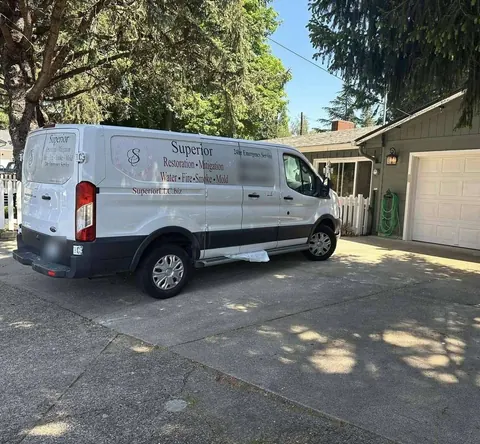
Find the moisture, remove the growth, dry the framing.
Tell Superior what you can see from the access, whether there is standing water and whether you smell sewage. The source decides the cleanup and who else needs to be called.
Assess before entry
Check the access, electrical hazards and the kind of water before anyone goes in. Inspect the framing, subfloor and insulation, and use moisture meters to help map the affected areas, including the floor above.
Remove water, wet materials and growth
Remove standing water and insulation that cannot be cleaned. Clean the framing that stays, and handle sewage-affected areas as contaminated.
Dry the wood and check it
Dry the framing until moisture readings say the wood is dry. Explain what plumbing, drainage, ground-cover or vent work others still need to complete.
KEEP THE FACTS TOGETHER
Record what is under the house.
Because nobody should go in, your record is made from the access and from the rooms above. Ask your insurer what it needs. Your policy and your insurer decide what is covered, and policies often treat groundwater and long-term moisture differently from a sudden pipe failure.
- When the growth or odor was noticed, the recent weather and whether the space has been wet before.
- Photos from the access showing the growth, the ground cover, the insulation and any water.
- What you heard or smelled, and whether any plumbing was leaking.
- Photos of the floors in the rooms above the affected area.
- The plumber’s or drainage contractor’s findings, the remediation scope, the moisture-meter findings for the framing and subfloor, and the drying records.
FIX · CLEAN · CONFIRM DRY
Before new insulation and ground cover go in.
- Confirm the source is corrected: the pipe or drain is repaired, or the drainage, ground-cover or vent problem has been addressed.
- Ask for the moisture-meter findings for the joists, beams and subfloor. Confirm that the wood meets the restoration drying criteria before new insulation is installed.
- Confirm what was removed and how the remaining wood was cleaned. A dry reading shows that the wood is dry. It does not show that mold has been cleaned up.
- If sewage was involved, confirm how the affected surfaces were cleaned. Dry readings do not establish that contamination has been removed.
- Have the space looked at again after the next period of heavy rain.
AFTER THE CLEANUP
Keep the crawl space dry.
- Keep gutters clean and downspouts discharging away from the foundation, and keep the ground sloped away from the house.
- Keep a continuous ground cover of heavy plastic over the soil. Building America guidance calls for polyethylene sheeting at least 6 mil thick with overlapped seams.
- Keep foundation vents clear, and take out foam vent blocks that were put in for winter.
- If water collects regularly, ask a drainage contractor about drainage and a sump pump. A ground cover alone does not stop water coming in.
- Building America guidance is to look at the crawl space at least once a year. From the access, do it after heavy rain and after any plumbing work.
QUESTIONS BEFORE YOU CALL
A few things you may be wondering.
Is some mold in a crawl space normal?
Mold spores are everywhere, and EPA says it is impossible to get rid of all of them. Visible growth on the joists or insulation is different. It means the wood or the air under the house has been damp for some time, and the moisture needs to be found.
Can crawl space mold affect the house above?
It can. Leaking or disconnected ducts and gaps in the floor let air move between the crawl space and the rooms above. A musty smell indoors is a reason to have the crawl space checked.
Should I open or close the crawl space vents?
Keep the vents clear of leaves, soil and stored items, and remove foam blocks that were left in after winter. Whether a crawl space should be vented or sealed depends on the house and on fixing water entry first. Ask a contractor who does that work.
Will a new plastic ground cover fix it?
It helps with moisture rising from the soil, and the Washington State Department of Health recommends heavy plastic over earth floors in crawl spaces. It does not fix a plumbing leak or rainwater coming in, and it does not remove growth that is already on the wood.
Sources and further detail
General safety and equipment references checked November 18, 2026. These are general references. Your home, its age and its materials may call for different steps.
- U.S. Department of Energy Building America: looking at a crawl space for moisture problems ↗
- U.S. Department of Energy Building America: water management for an existing crawl space floor ↗
- Washington State Department of Health: mold ↗
- EPA: A Brief Guide to Mold, Moisture and Your Home ↗
- EPA: mold cleanup in your home, including contaminated water ↗
- EPA: using moisture meters to locate wet materials and monitor drying ↗
- EPA: should you have the air ducts in your home cleaned? ↗